World Climate: Past, Present & Future.
In the past, earth's climate has changed from extreme hot to extreme cold average temperatures through the geological times. Theories about the earth's beginnings suggest that it was a very volatile phase 4 billion years ago, and after that it started to cool down. Life started appearing after a few hundred million years, or 3.6 billion years ago. As life became more complex starting with the simplest Eubacteria, the climate of the earth started changing to humid hot temperatures.It was still hotter than present average temperatures, at the time when the big lizards(dinosaurs) roamed the earth, some calamity happened, either a crashing meteor had an impact with the earth, or too much volcanic activity, which blocked the sunlight for a very long time. It led to cooling of earth's temperatures considerably, eventually leading to Ice-Age. During this phase, the earth was mostly covered with ice.

Evidence of the earth's past is studied by boring hole in ancient ice-sheets which have not melted for millions of years. To learn about ways to make holes in ice-sheets and other findings about climate changes, visit NASA website for climate observations at,
http://earthobservatory.nasa.gov/Features/Paleoclimatology_IceCores/ f
This was followed by a warmer phase in which new species came into existence, while some survived the frozen ice age. According to theories it happened because of increasing greenhouse gases from the volcanoes, which warmed the atmosphere, thus melting the frozen situation for our earth.
Last 2.6 million years are called a Quaternary. It is significant because this is the period human race has been present on the face of the earth during this time. As human dwellings, villages, towns and the highrises occured over the centuries, it all had an impact on earth's climate.
Now again due to higher levels of greenhouse gases like Carbondioxide(CO2), Sulphur Dioxide(SO2) and nitrogen oxides in the atmosphere due to burning of fossil fuels, the climate is warming once again. It can lead to higher sea-levels and much much more as consequences.
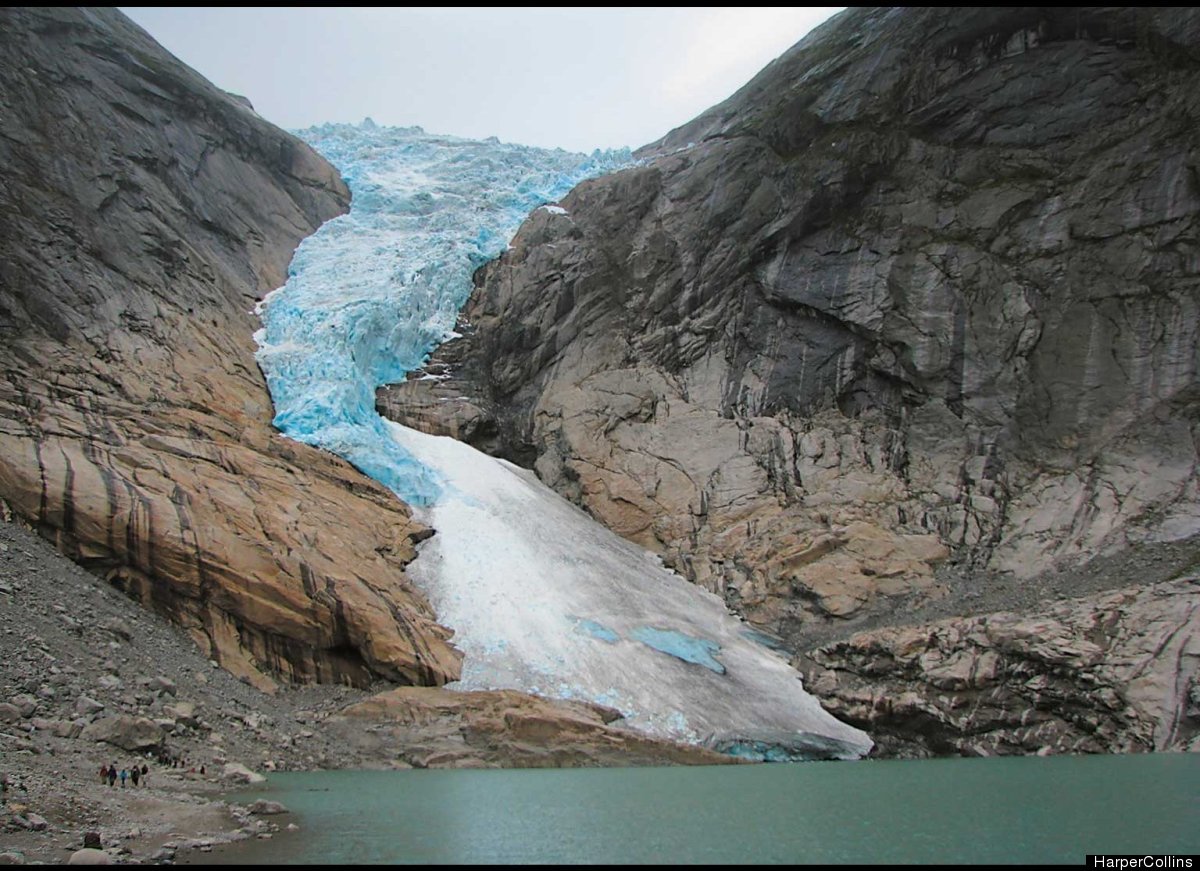
Picture courtesy of Harper Collins

No comments:
Post a Comment